Walk down the cleaning aisle of any supermarket and you’ll see words like "natural" and "plant-based" promising safety. But for those of us in the fitness community, we look at labels differently. We care about performance and durability.
Why are these products so expensive when their ingredients are so simple? The answer is marketing. True frugal-organic living is about understanding ratios. As equipment engineers at Ntaifitness, we know that the same precision used to calibrate a treadmill should be applied to the liquids used to clean it.
This article breaks down the hidden toxins in cleaners and why precision—not guesswork—is the key to a safe, high-performance home environment.
Green Label ≠ Transparency
Vague terms often hide compounds that can trigger headaches during high-intensity training.
Equipment Degradation
Commercial chemicals can corrode gym upholstery and metal frames over time.
Guesswork DIY Risks
Too much acid ruins finishes; too little fails to kill bacteria from sweat.
The Hidden Toxins Still Lurking
Even products marketed as “eco-friendly” can be problematic for athletes. When you are breathing heavily during a workout, your respiratory rate increases, making you more susceptible to volatile organic compounds (VOCs). Synthetic fragrances and phthalates often found in "green" cleaners can irritate the lungs and disrupt hormones.
For those with a home gym, residues left on mats and handles aren't just a surface issue—they are a contact issue.
DIY cleaning with organic ingredients avoids these risks, but only if mixed correctly to ensure sanitation without causing skin irritation during your next set of floor exercises.
The Chemistry of Natural Cleaning
Natural cleaning works, but it requires the same "marginal gains" mindset we apply to fitness. Take vinegar: its 5% acetic acid concentration determines its disinfecting power.
In a gym setting, you need a higher concentration to handle sweat and bacteria on a weight bench than you do for cleaning a glass window. Over-dilution makes your "clean" gym a breeding ground for germs. Under-dilution can eat away at the vinyl of your workout bench or the coating of your dumbbells. Precision is non-negotiable.
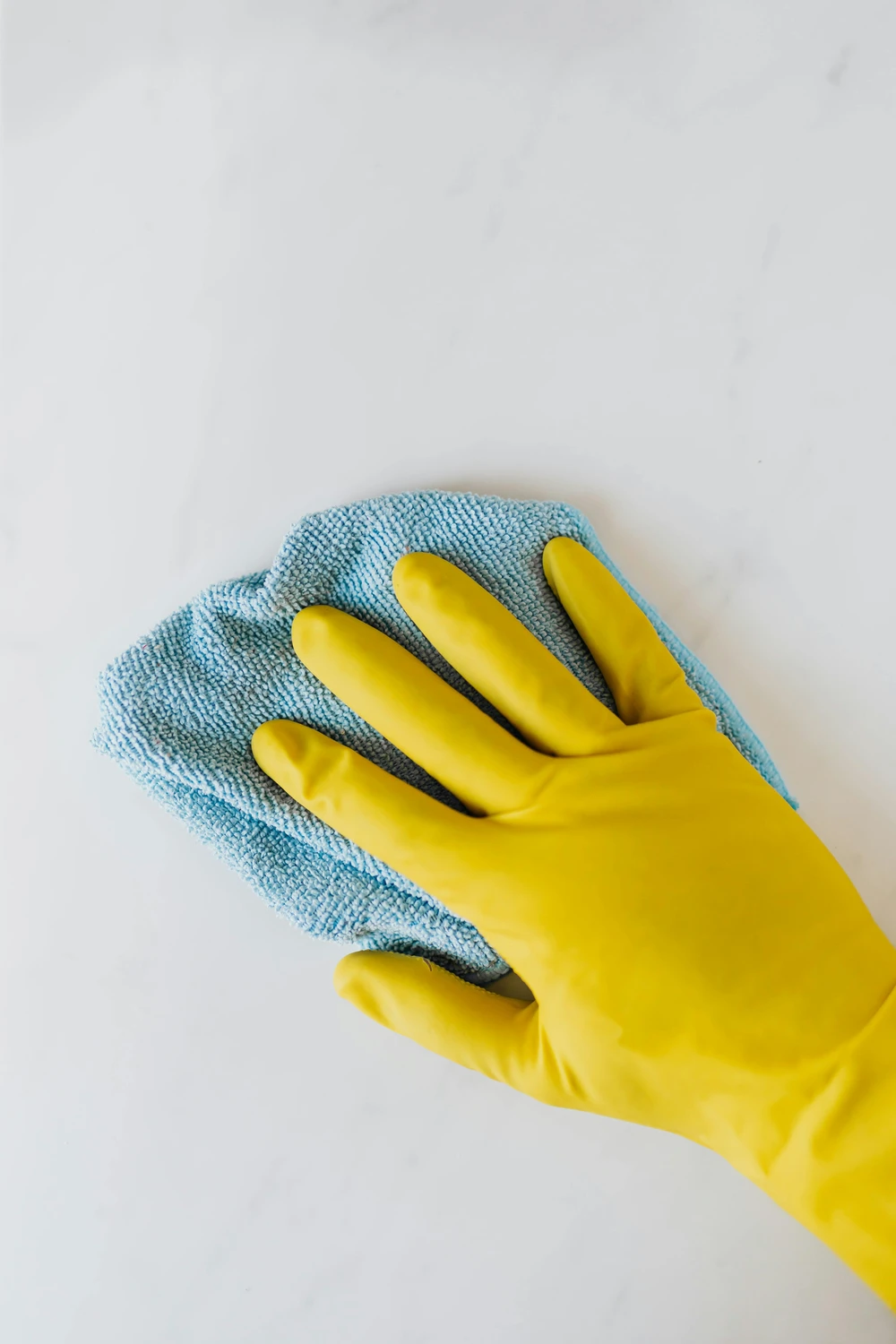
Why Most DIY Cleaner Recipes Fail
The "one size fits all" approach of the internet fails because it ignores Surface Sensitivity:
- Gym Mats: Require enough acidity to kill bacteria but enough dilution to prevent the rubber from cracking.
- Touchscreens: Need a very gentle touch to avoid ruining the interface of your cardio equipment. The missing piece is calculation.
Precision Mixing: The Role of a DIY Cleaner Calculator
his is where a DIY Cleaner Calculator becomes an essential part of your "maintenance kit." Instead of guessing, you input the specific concentration and the surface type.
DIY Cleaner Calculator
Professional-grade sanitation for your home and home gym.
Budget Analysis: Store-Bought vs. DIY
A $2 gallon of white vinegar can replace $50+ worth of commercial cleaners. For an athlete, that's the cost of a high-quality tub of protein or a new set of resistance bands.
| Category | Store-Bought | DIY (with Calculator) |
|---|---|---|
| Cost per ounce | High | Low |
| Transparency | Limited | Full |
| Surface Safety | Fixed | Adjustable |
Conclusion
When you replace guesswork with calculation, you gain control. DIY cleaning stops being a hobby and becomes a system that supports your health, your budget, and the longevity of your fitness equipment.
Ready to detox your home? Start with precision. Mix your next batch using the DIY Cleaner Calculator here.
Frequently Asked Questions:
Are DIY non-toxic cleaners actually effective?
Yes, when mixed with precision. Ingredients like white vinegar have proven antimicrobial properties. However, effectiveness depends entirely on the correct acetic acid concentration. Our calculator ensures your mix is strong enough to clean but safe for the surface.
Is vinegar safe for gym equipment and home surfaces?
Vinegar is highly effective for removing sweat and grime from gym benches and mats, but it should not be used on natural stone, unsealed grout, or screens. For sensitive surfaces, task-specific dilution is mandatory to prevent surface erosion.
How much can I save by switching to DIY cleaners?
By using a $2 gallon of white vinegar and our ratio calculator, many households save over $50-$100 annually compared to buying premium "green" brands. You also significantly reduce plastic waste and indoor chemical exposure.
Why is a calculator better than just "guessing" the ratio?
Visual estimation is inconsistent. Inaccurate mixing can lead to two extremes: a solution that fails to sanitize or one that is too acidic, potentially damaging wood finishes or gym equipment upholstery.